Moving into a high-rise isn’t like hauling boxes into a house or walk-up. Tight elevators, building rules, and city logistics can catch you off guard if you're not prepared. These apartment move tips will help you handle it all without the stress.
Your High-Rise Moving Guide
We've already compiled a moving checklist and timeline, which is useful for all kinds of moves, but now let's look specifically at how to make your high-rise apartment move easier.
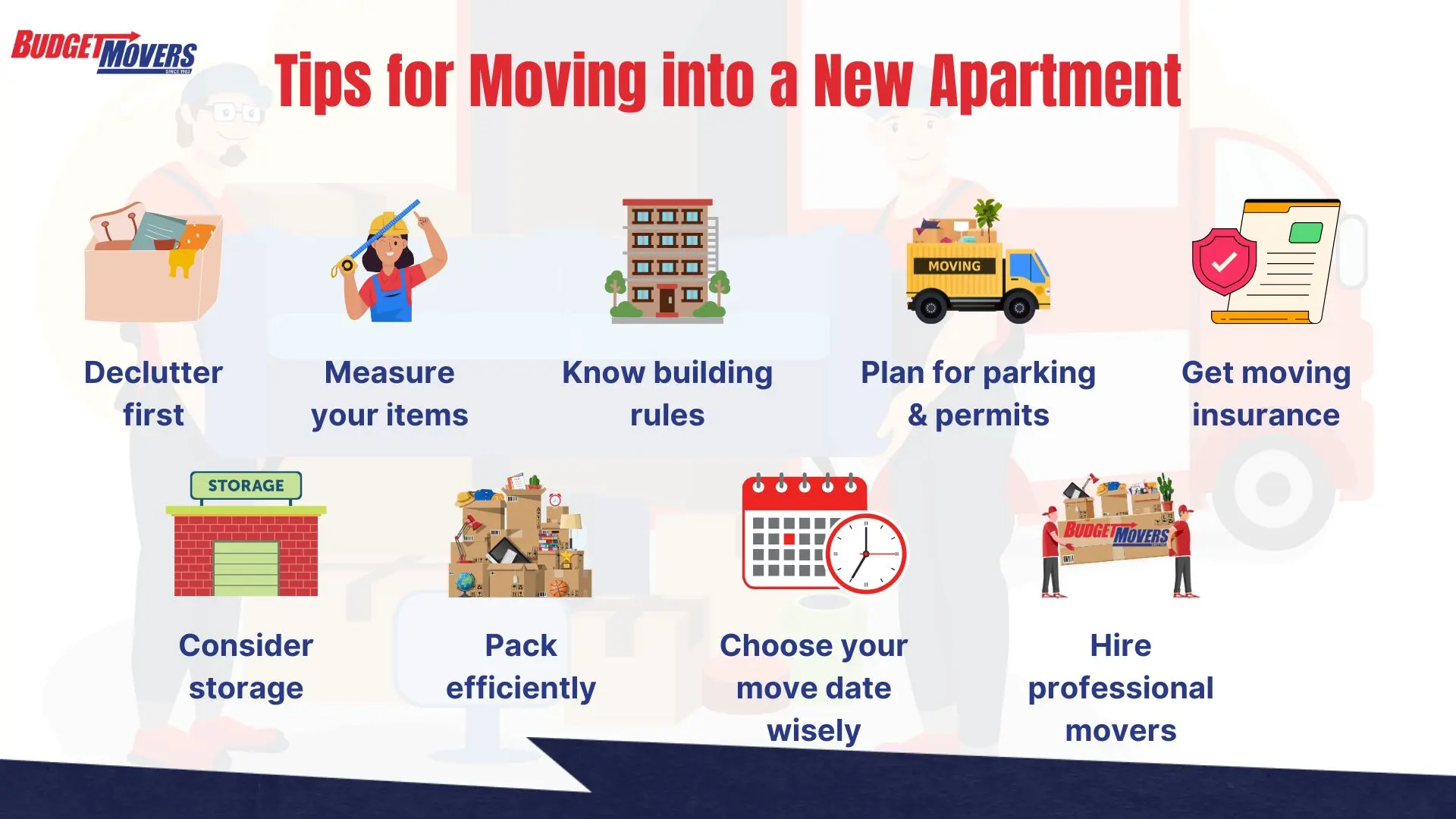
1. Declutter Before You Pack
Let's face it — high-rise apartment living typically means less space. Before your move, take a good look at what you own and be ruthless about what stays and what goes. That bulky sectional might not fit through narrow hallways or private elevators. Moving furniture into a high-rise apartment is the perfect excuse to sell items you've been holding onto for too long, donate what you don't need, or gift items to friends. Every square foot in your new space counts!
2. Measure Your Belongings
Nothing ruins move-in day faster than realizing your bed frame or table can’t squeeze into the elevator. Measure everything (sofas, dressers, bookshelves) and compare them to the entryways, hallways, and elevator dimensions at the new place. Don’t forget tricky angles and ceiling height. Put together a quick list so you're not guessing on moving day.
3. Understand Your Building's Moving Policies
High-rise buildings tend to have strict moving policies, and skipping the fine print can cost you. Some only allow moves on weekdays, others require you to reserve the elevator or submit paperwork for your movers’ insurance. Don’t assume your timeline will work. Reach out to the property manager well in advance and find out exactly what’s required. If you miss a step, you could face surprise charges or get bumped to another day.
4. Secure Parking and Moving Permits
Finding space for a moving truck in a city isn’t easy. Some buildings offer loading docks or reserved parking spots, but they often need to be booked in advance. Depending on local rules, you might also need a permit for the moving vehicle.
If your building doesn’t have a freight elevator or secure parking nearby, check out the area ahead of time so your movers know where to go without wasting time or risking a fine.
5. Get Moving Insurance
Moving into a high-rise apartment building presents more opportunities for accidents — from scratched elevator interiors to damaged hallway walls. Budget Movers is a fully licensed and fully insured moving company. Also, review your renter's insurance policy to see if it covers damages during a move.
6. Explore Storage Solutions
When transitioning to limited space in a high-rise, temporary storage can be a lifesaver. Rather than rushing to decide what fits in your new apartment, store extra furniture and seasonal items until you're settled. This approach lets you arrange your essential items first, then thoughtfully decide what additional pieces will work in your new space. At Budget Movers, we provide climate-controlled short-term and long-term storage options for your convenience.
7. Pack with Elevators in Mind
High-rise apartment moves require a different approach to packing. Choose same-size boxes that stack neatly, and label them clearly with both contents and the room they’re headed for. Keep each one at a weight you can carry comfortably, especially if your movers get stuck waiting for the elevator. Use plenty of cushioning for fragile items, too, since they’ll spend more time in transit between trucks, elevators, and long hallways.
8. Time Your Move Strategically
Timing makes a big difference in high-rise apartment moves. Elevators are busiest during morning hours (7-9 a.m.), lunch breaks, and the evening rush (4-7 p.m.). Try to schedule your move for a late morning or early afternoon on a weekday, when most residents are away at work. Also, steer clear of the first and last few days of the month, when moving activity is at its peak. Some buildings even limit weekend move-ins to avoid disrupting other tenants.
If you can plan for a mid-month move on a Tuesday or Wednesday, you’ll likely have better access to elevators, less traffic in shared areas, and an easier time getting everything upstairs without delays.
9. Hire Professional Apartment Movers

High-rise moves aren't DIY-friendly. Professional movers who specialize in high-rise apartment living know exactly how to handle freight elevators, navigate tight spaces, and protect common areas.
We come with all the necessary equipment to move heavy furniture safely. Most importantly, we have experience dealing with building management and understanding each building's moving rules, making your move-in day far less stressful.
High-Rise Moving: Questions for Your Building Management
Before you lock in your move date, check in with your property manager and get clear on the building’s policies. These are the key questions to ask:
- Are there specific days or times when moving is allowed?
- Do I need to reserve a service or freight elevator in advance?
- Is there a time limit on elevator use?
- Are there any building fees for move-ins?
- Where can the moving truck park, and does that spot need to be reserved?
- Do any areas of the building need to be covered or protected during the move?
- Are there limits on what can be brought through the main lobby?
- Will staff be on-site to help with questions or elevator access?
- Is there a plan for disposing of boxes and packing materials?
Plan It Right with Budget Movers
Moving into a high-rise takes more than just packing boxes. It takes planning, coordination, and a team that knows the drill. Budget Movers has been handling apartment and condo moves throughout the Phoenix area for over four decades. We also manage long-distance relocations to and from Arizona. Our crews show up ready, with the gear, experience, and know-how to get you moved in without the usual delays and stress.
Let’s keep your move simple and get it done right. Contact us today for a free quote.
How do I prepare to move to another apartment?
Start early (6-8 weeks out) by decluttering to reduce what you move. Budget for expenses and decide if you'll hire professional movers or DIY. Arrange for utility transfers and mail forwarding. Pack non-essentials first, labeling boxes clearly, and set aside an essentials box for immediate needs. Finally, plan for cleaning and, if necessary, repairs at your old place.
How to move furniture into a small apartment?
Start by measuring everything, including furniture, doorways, hallways, and elevator interiors. If you hire professional movers, they’ll take care of the heavy lifting. That includes disassembling bulky pieces, wrapping and protecting furniture, and figuring out how to move it all through tight spaces. You just need to give them a clear path and let them know where things should go.