Planning a long-distance move can be overwhelming — between sorting, packing, and deciding what stays and what goes, it’s easy to feel lost. Unlike a local move, long-distance relocations have more variables, from mileage and weight-based pricing to complex logistics and stricter timelines. But here’s a truth that can ease the stress: understanding moving costs is one of the most powerful steps to simplify your move and take control of your budget.
Whether you're relocating for a job, family, or a fresh start, knowing what to expect in terms of pricing and services can make all the difference. In this comprehensive guide, our team at Budget Movers will break down average long-distance moving costs, explore the factors influencing pricing, and share practical money-saving strategies.
The Average Cost of Long-Distance Moves
So, what exactly is a long-distance move? Typically, any move over 100 miles or across state lines qualifies. Unlike local moves, which are often billed by the hour, long-distance relocations use a combination of distance, weight, and service levels to calculate cost.
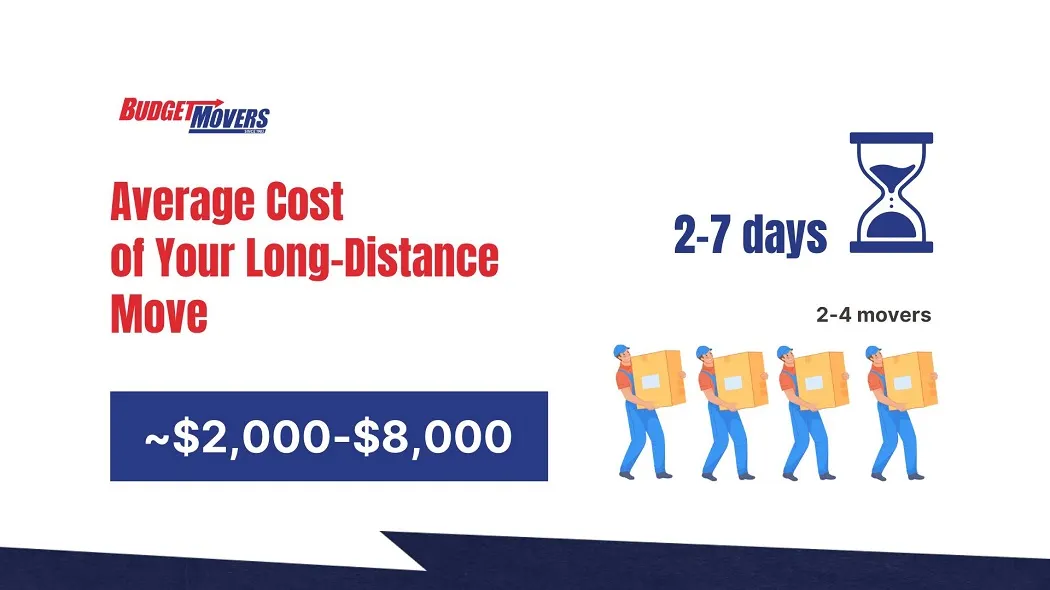
Nationally, the average cost of a long-distance move ranges from $2,000 to $8,000, though prices can easily climb to $10,000+ for larger homes or coast-to-coast relocations. Most long-distance moves take 2–7 days to complete, depending on distance and complexity, and typically require a crew of 2–4 movers. Numerous factors impact the final price tag, from the weight of your belongings to the specific services you select.
What Affects the Cost of Your Long-Distance Move?
Understanding what drives the cost of your move can help you make informed decisions and potentially save thousands of dollars along the way. Let's explore the key factors that will impact your bottom line.
Distance and Location Specifics
Distance is usually the most significant factor affecting your moving costs. Most professional moving companies calculate cross-country rates based on weight and total distance. Your starting and ending locations also significantly impact costs.
Urban areas often have higher labor costs and potential challenges like parking restrictions or elevator access. Additionally, some regions of the country have higher overall moving costs due to local regulations or higher operating expenses.
To give you a better idea, here are some sample moves from Phoenix, AZ:
Home Size and Belongings Weight
Most cross-country movers calculate costs partially based on the weight of your shipment, typically charging between $0.50 and $0.80 per pound. The size of your home directly correlates with how much your belongings will likely weigh, so this is a convenient shorthand for estimating costs.
This is why decluttering before your move can significantly reduce costs. Every pound you eliminate from your shipment translates to direct savings on your final bill, not to mention less packing and unpacking on either end of your journey.
Moving Timeline and Seasonality
When it comes to long-distance moving costs, timing is everything. Choosing the right season, day, and booking window with your moving company can significantly affect your final price. Here's how seasonality plays a role in what you’ll pay:
- Peak season (May – September): This is the busiest time for movers, with prices often 20–30 percent higher due to high demand. Families prefer this window since school is out, but that popularity comes at a cost.
- Off season (October – March): Moving companies are less busy, so rates drop and availability improves. Choosing a weekday move during the off-season can lead to significant savings.
- Weekend moves: Weekends are in high demand as people try to avoid taking time off work. Rates are generally higher compared to midweek options.
- Last-minute bookings: If you're relocating on short notice, expect to pay premium prices, sometimes up to 25 percent more, due to limited availability and rush service fees.
Want the best rates? We encourage you to book your moving date 4–8 weeks in advance and choose a weekday during the off-season (October through March).
Moving Services and Add-Ons
The level of service you choose plays a big role in your overall moving costs. Most professional moving companies offer flexible tiers to match your budget and effort level. With self-service, you do all the packing and loading, while they just handle the driving. It's cheaper, but labor-intensive. Partial service moving includes loading/unloading and transport, while you take care of packing. Full-service movers manage everything — packing, moving, and setting up your new place. This is the most hands-on type of service.
Common additional services can significantly increase your bottom line:
- Professional packing/unpacking: Adds $500–$2,000 depending on home size.
- Furniture disassembly/reassembly: Adds $200–$500.
- Specialty item handling (pianos, safes, artwork): $200–$600 per item.
- Temporary storage: $100–$250 per month.
Comparing Your Options: From DIY to Full Service
When planning your cross-country move, you'll need to decide between hiring movers or moving by yourself. There isn’t a right or a wrong path, and each approach has distinct advantages and drawbacks:
Professional Long-Distance Movers ($4,000–$10,000)
A full-service moving company handles everything: packing, disassembling furniture, transporting, and setting things up in your new home. Costs vary depending on size and distance, but expect between $4,000 and $12,000 for a cross-country move.
The biggest advantage of hiring movers is convenience. You won’t have to lift a finger — they can provide loading and packing services, transport, and even furniture reassembly. This option saves time, reduces stress, and ensures your belongings are professionally protected with proper packing supplies. If you’re moving with kids and pets, or you have a high-stress job, this option is often worth every penny!
DIY Truck Rental ($1,500–$4,500)
Renting and driving your own moving truck is typically the least expensive option upfront, however, this route requires significant time and effort. The base rental fee for a cross-country one-way truck rental usually starts around $800–$1,200 for a medium-sized truck, but that's just the beginning.
Additional costs include mileage fees that typically run $0.70–$1.00 per mile, fuel expenses (most trucks get 10–12 mpg), insurance ($100–$200), equipment rental for dollies and furniture pads, plus lodging and meals during travel. These supplementary costs can add up quickly on a cross-country journey.
Moving Containers ($2,000–$5,000)
Portable moving containers cost $2,000 to $5,000, depending on size and distance. The company drops off containers at your current home, you pack them at your own pace, then the company transports them to your new location, where you unload them.
This option is ideal for those who want to avoid driving a truck across the country but don't mind handling the packing themselves. However, one key disadvantage is the physical effort required — you’re still responsible for all the heavy lifting, packing, and organizing. Plus, if you underestimate how much space you need, you’ll need to add extra containers, which can quickly increase your cross-country movers’ costs.
5 Smart Ways to Save on Your Long-Distance Move
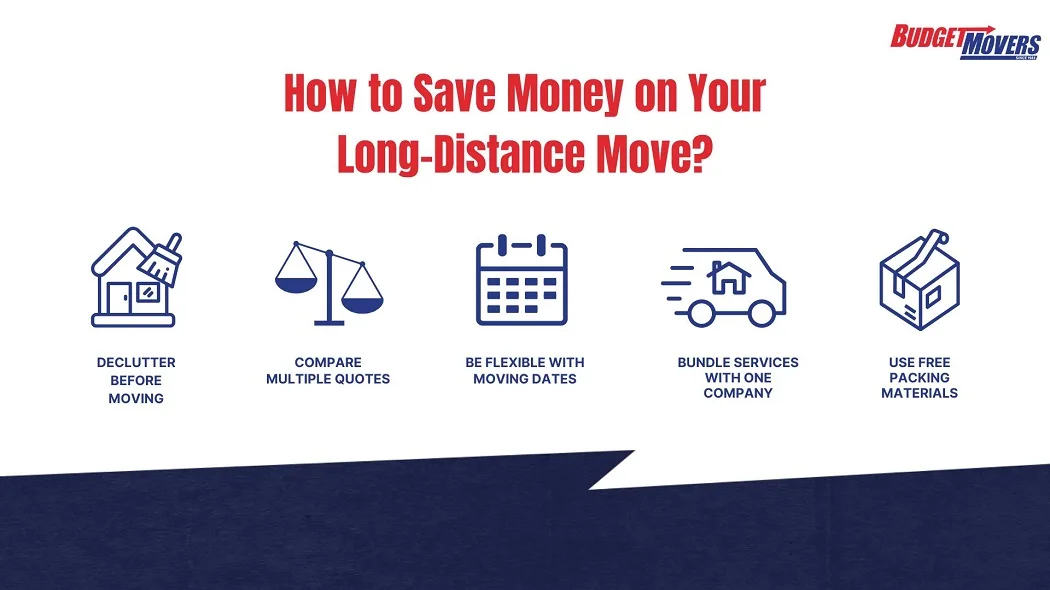
Even with the substantial expenses involved when moving cross-country, there are plenty of opportunities to cut costs without compromising quality or adding stress to your moving process. Consider the following to make your move more affordable.
- Declutter before moving: Sell, donate, or discard items you rarely use to reduce shipment weight and save money.
- Compare multiple moving quotes: When choosing a moving company, request at least three detailed estimates with identical services for accurate comparison.
- Be flexible with moving dates: Schedule mid-week during off-season (October – April) to save 20–30 percent off peak rates.
- Bundle services with one company: Using one provider for all services often unlocks package discounts.
- Use free packing materials: Instead of buying new boxes and bubble wrap, check local grocery stores, liquor stores, and online marketplaces for free supplies.
Don’t be intimidated by a cross-country move. With thoughtful planning and these strategic approaches to achieve significant cost savings, you can significantly reduce your cross-country moving costs without adding undue stress to an already challenging process.
Make Your Long-Distance Move Easy
A smart long-distance move starts with understanding what impacts your moving costs — distance, timing, home size, and service level. The goal isn’t just to find the cheapest route, but to balance cost with convenience. Start early, compare quotes, and move only what you need to keep your cross-country move affordable and stress-free.
As a trusted Phoenix moving company since 1983, Budget Movers specializes in making long-distance relocations efficient and affordable. To this day, we’ve handled over 20,000 successful moves, and we know what it takes to make your move stress-free.
Our transparent pricing, professional teams, and comprehensive services take the guesswork out of your move. Whether you're heading across the state or across the country, contact us for a personalized estimate tailored to your specific requirements.